
How to Advertise in China in 2025: Proven Baidu Marketing That Works
Advertising in China is very different from what you may be used to in the West. The market is large, complex, and always changing. Many people try to share tips, but the truth is, it takes real experience to know what works.
One thing is clear: Baidu advertising is a must if you want to reach Chinese customers. Baidu is China’s biggest search engine, with millions of users searching every day for products and services. When people search on Baidu, they are ready to find solutions, making it a powerful place for your ads.
This blog covers Baidu advertising, key ad formats, campaign optimization, and how to integrate Baidu ads into your China marketing strategy along with clear, practical steps to win in China’s digital market.
Whether you’re new to China or looking to improve your campaigns, understanding Baidu advertising will help you connect with millions of potential customers and grow your brand in this exciting market.
Why does the Chinese advertising market matter?
China is moving fast and shows no signs of slowing down. With over 1.4 billion people and a booming economy, its market is massive — and no brand looking to grow can afford to ignore it.
Some might say all you need is a simple social media page with attractive images and a quick translation. But it’s not that easy. To truly connect with Chinese customers, you have to meet them where they spend their time, and communicate in a way that resonates both culturally and linguistically.
That’s where Baidu advertising comes in. Baidu is China’s top search engine, the place millions of people go daily to find products and services. Unlike social media, where you push messages, Baidu lets you catch customers when they’re actively searching. It’s a golden chance to show up right when they need you.
China has the largest search advertising market in the world. China leads the world in search advertising, with the market expected to hit over $250 billion by 2025. Using Baidu effectively means tapping into that powerhouse and growing your brand in China’s unique digital landscape.
By 2029, digital ads are expected to make up 89% of all global ad spending. In China, companies are using data analytics and AI more than ever to personalize ads and improve campaign performance.

Building your brand organically is a great start, but in a crowded online space, advertising on Baidu is essential to cut through the noise and drive real results. The good news? You don’t need a big budget to start well-planned, targeted Baidu campaigns that can drive solid results even with limited spending.
Ready to learn how Baidu advertising can transform your China strategy? Let’s dive deeper.
Why Baidu is the top choice for advertising in China
China’s digital advertising landscape is vast and dynamic, driven by one of the largest internet user bases in the world. With over a billion internet users, China’s digital ad market is booming, reaching hundreds of billions of dollars annually. For brands looking to enter or expand in China, understanding how to navigate this landscape is crucial.
One key aspect to know is the difference between search engine advertising and other digital or offline channels. Search engine ads are “pull” marketing and they capture users actively searching for specific products or services.
This makes them highly targeted and intent-driven. In contrast, many other channels, like social media or offline ads, are “push” marketing — they show ads to users whether they are looking or not, which can sometimes lead to lower conversion rates.
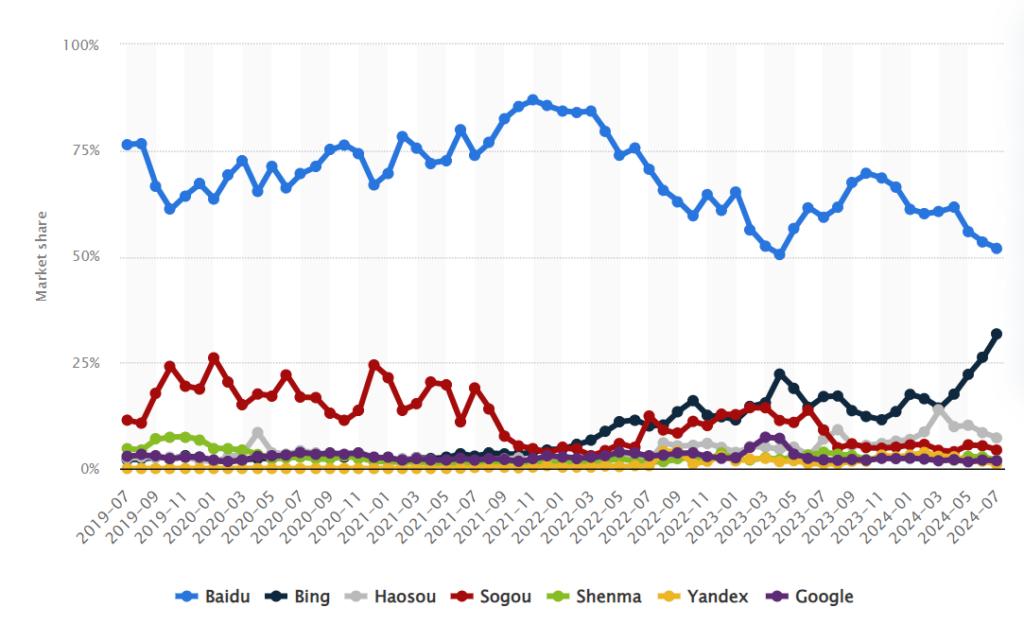
Baidu dominates China’s search engine market and is by far the most popular platform for Chinese consumers when they’re actively searching for information or products. Because of this, Baidu is the go-to platform for brands wanting to capture high-intent customers people ready to buy or engage.
Mastering Baidu means your brand can reach a huge, engaged audience at the moment they’re ready to act. While alternatives like 360 Search and Sogou do exist, Baidu’s scale, reach, and advertising tools make it the best choice for most brands aiming for growth in China. These platforms have smaller market shares and fewer active users, which can limit the impact.
In short, Baidu remains the cornerstone of effective China’s digital advertising. For brands serious about tapping into China’s massive market, learning how to advertise on Baidu is the first essential step to reaching and converting customers.
Understanding Baidu advertising: Key features and ad formats
Baidu offers a variety of advertising formats designed to help brands connect with Chinese consumers in effective and engaging ways. Understanding these options is key to making the most of your Baidu marketing efforts.
The most common format is Baidu PPC (pay-per-click) search ads. These are text ads that appear when users search for specific keywords related to your product or service. Because they target people actively looking for what you offer, PPC ads are highly effective for driving traffic and conversions.
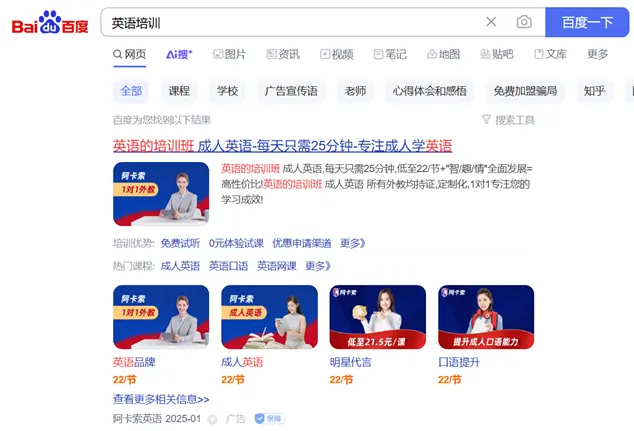
Beyond text ads, Baidu also offers display ads, which can include single or multiple images, videos, and rich media content. These visually engaging ads show up across Baidu’s extensive network, helping brands build awareness and attract attention more creatively.
One unique feature is Baidu’s Brand Zones. These are custom branded landing pages that appear right within Baidu’s search results. Brand Zones allow you to create a tailored experience that highlights your products, promotions, and brand story — all without sending users away from Baidu.
Below is an example of what a Regular Brand Zone looks like. It’s designed for businesses that want to stand out on the search results page without needing a fully customized layout.
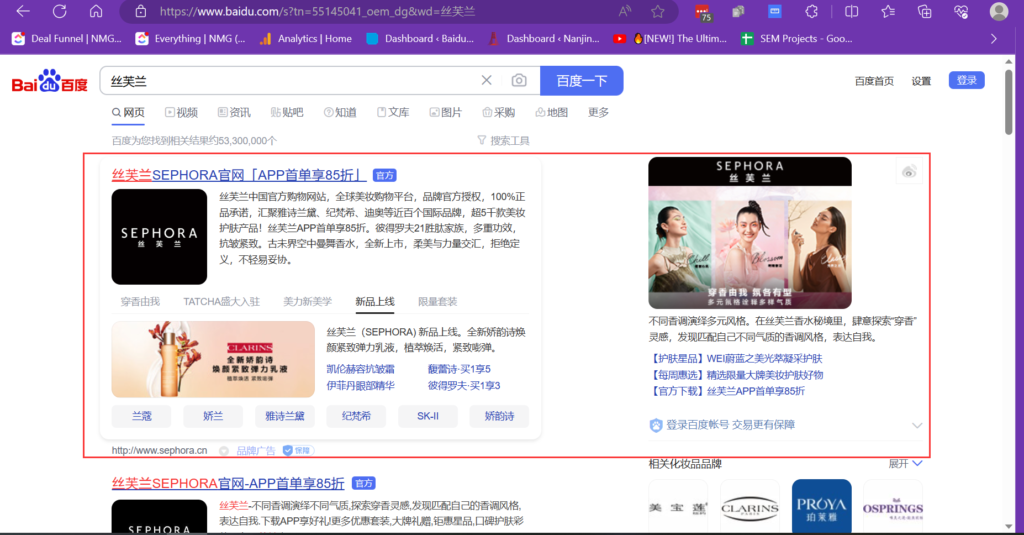
Baidu’s Advanced Brand Zone gives businesses more control and customization. With this option, you can change the entire search results page, even the background and Baidu’s logo color to match your brand’s look and feel. Here is an example of Advanced Brand Zone placements.

For direct conversions, Baidu provides ads with built-in call-to-action buttons like “Call Now” or “Download App.” These ads make it easy for users to take immediate action, boosting lead generation and sales directly from the search results page.
Interactive ads are another powerful tool. They can include contact forms or chatbots that engage users in real-time conversations, offering personalized customer support and helping guide them through the buying process.
Lastly, Baidu offers Feed ads, which appear within Baidu’s content feeds and combine native ad formats with targeting options. These ads blend seamlessly into user content, making them less intrusive and more engaging.
Together, these Baidu ad formats give brands a flexible toolkit to navigate Chinese digital marketing and reach consumers at every stage of their journey from discovery to purchase in ways that feel natural and effective.
Setting up and optimizing Baidu ad campaigns
Setting up and optimizing Baidu ad campaigns takes more than just translating your usual ads. To start, research is key. Use Baidu’s own keyword tools and local resources to find high-impact, localized keywords that Chinese users actually search for. Avoid relying solely on direct translations—understanding local language nuances and search habits is essential for success.
Next, crafting your ad copy should focus on cultural relevance. Machine translation often misses the mark, so it’s important to create ads that resonate with Chinese customers, reflect local values, and speak their language naturally. This builds trust and engagement.
Once your ads are ready, direct users to optimized landing pages designed specifically for Baidu and Chinese users. These pages should load fast, be mobile-friendly, and follow local design preferences. A seamless, culturally familiar experience increases the chances of conversion.
Budgeting is another important factor. Start small with your bidding strategy to test what works. Baidu offers flexible bidding options, so you can scale your campaigns based on early results without overspending. Smart budgeting helps you find the sweet spot between visibility and cost-efficiency.
Don’t forget to leverage Baidu’s AI and analytics tools. These powerful features help you refine your targeting, monitor performance, and improve return on investment over time. Regularly analyze data to understand which keywords, ads, and audience segments perform best.
Finally, keep a close eye on compliance. Baidu has strict policies regarding ad content and formats. Monitoring and adjusting your campaigns to stay within these rules avoids penalties or suspension.
Thus, successful Baidu campaigns combine localized research, culturally relevant messaging, smart budgeting, and ongoing optimization. Mastering these steps will help your brand connect with Chinese customers effectively and grow your presence in this competitive market.
Choosing Baidu vs other Chinese search engines
When it comes to advertising on Chinese search engines, Baidu, 360 Search (also known as Haosou), and Sogou are the main players. Each has its strengths, but knowing how to choose between them can make a big difference in your marketing results.
Baidu is the most popular domestic search engine in China, with the largest user base. It’s the top choice for most advertisers because it offers the widest reach and the most advanced advertising tools.
Baidu’s search results are trusted by users, making it ideal for brands aiming to attract customers with strong purchase intent. Its ecosystem also includes features like Baidu Maps and Baidu Tieba, adding extra ways to engage users.
| Search engine | Monthly Active Users | Key features & audience | When to use |
| 360 Search (Haosou) | 120 million | Focus on security and privacy; appeals to a different user base than Baidu | To supplement Baidu campaigns and diversify reach |
| Sogou | 39 million | Strong integration with the Tencent ecosystem (WeChat, QQ); targets users active on Tencent platforms | For brands targeting Tencent platform users |
Integrating Baidu ads into your China marketing strategy
Integrating Baidu advertising into a broader marketing strategy is key to winning in China’s complex digital landscape. While Baidu is excellent at capturing high-intent users through search ads, combining it with other channels creates a more powerful, well-rounded approach.
Social media platforms like WeChat, Red (Xiaohongshu), and Douyin (TikTok’s Chinese version) play a huge role in building brand awareness and engagement. These channels allow brands to connect with audiences on a personal level through content, communities, and conversation. Using Baidu ads to target active searchers while maintaining an engaging social media presence helps cover both demand generation and brand loyalty.
Influencer marketing is another critical piece. Key Opinion Leaders (KOLs) and Key Opinion Consumers (KOCs) influence purchase decisions massively in China. Collaborating with influencers alongside Baidu campaigns creates trust and social proof, making your brand feel more authentic and approachable.
Influencers can help introduce your brand to wider audiences who may then search for you on Baidu, creating a smooth customer journey. Driving traffic from Baidu ads to e-commerce sites and cross-border e-commerce (CBEC) platforms is a natural fit.
Once users find your brand via search, guiding them straight to product pages or mini-programs helps turn interest into sales quickly. Don’t overlook offline-to-online synergy either. Outdoor ads featuring QR codes linked to Baidu landing pages or mini-programs blend traditional marketing with digital convenience. This approach encourages real-world audiences to engage online, expanding reach and improving conversion.
A great example is Concept2, a fitness brand that combined Baidu search ads with strong social media campaigns and influencer partnerships. This integrated strategy boosted both online sales and brand visibility, showing how Baidu and other channels work hand-in-hand to drive success in China.
Overall, Baidu advertising works best when it’s part of a broader, multi-channel approach tailored to the unique Chinese market. Combining search ads with social media, influencer marketing, e-commerce, and offline tactics maximizes impact and growth potential.
Common challenges and how to overcome them on Baidu
- Chinese regulations and ad compliance are strict; ads must follow local standards to avoid penalties or suspension.
- Language and cultural differences mean simple translation isn’t enough — ads need to resonate with Chinese audiences by reflecting local values.
- Baidu’s platform can be complex and less intuitive, making account setup and campaign management challenging.
- Common mistakes include poor keyword research and ignoring mobile optimization, despite most users accessing via smartphones.
- Partnering with local agencies or experts helps navigate regulations, optimize campaigns, and avoid common pitfalls for smoother, more effective advertising on Baidu.
Practical steps to get started with Baidu advertising
- Define clear goals: Decide what you want to achieve in the Chinese market—whether it’s building brand awareness, generating leads, or driving sales. Clear goals will guide your ad strategy.
- Build a localized online presence: Create a website, landing pages, and social media profiles like WeChat that are tailored to Chinese consumers, not just translated versions of your existing content.
- Set up a Baidu ad account: Prepare the necessary documents such as business licenses and verification papers to open your Baidu advertising account smoothly.
- Launch pilot campaigns: Start with small, targeted ad campaigns. Monitor the results closely, learn what works, and make improvements based on data.
- Partner with a local marketing agency: Consider working with a China-based agency that understands local regulations and user behavior to optimize your campaigns and save time.
Following these steps will help you enter Baidu advertising confidently and make the most of China’s vast market.
Final words
Advertising in China, especially through Baidu, offers a powerful way to reach millions of high-intent customers in one of the world’s fastest-growing markets. While the landscape can be complex, mastering Baidu’s tools and integrating them into a broader, localized marketing strategy will help your brand stand out and grow in China.
Start with clear goals, build a tailored online presence, and test campaigns thoughtfully to maximize results. Don’t hesitate to partner with local experts who can guide you through the unique challenges and opportunities of Chinese advertising.
Ready to unlock China’s vast potential and connect with millions of new customers?
Take the first step today—explore Baidu advertising and start growing your brand where it matters most.