
Over 700 million people use Baidu’s app alone, with even more people using the search feature while not logged in.
Baidu Market Share
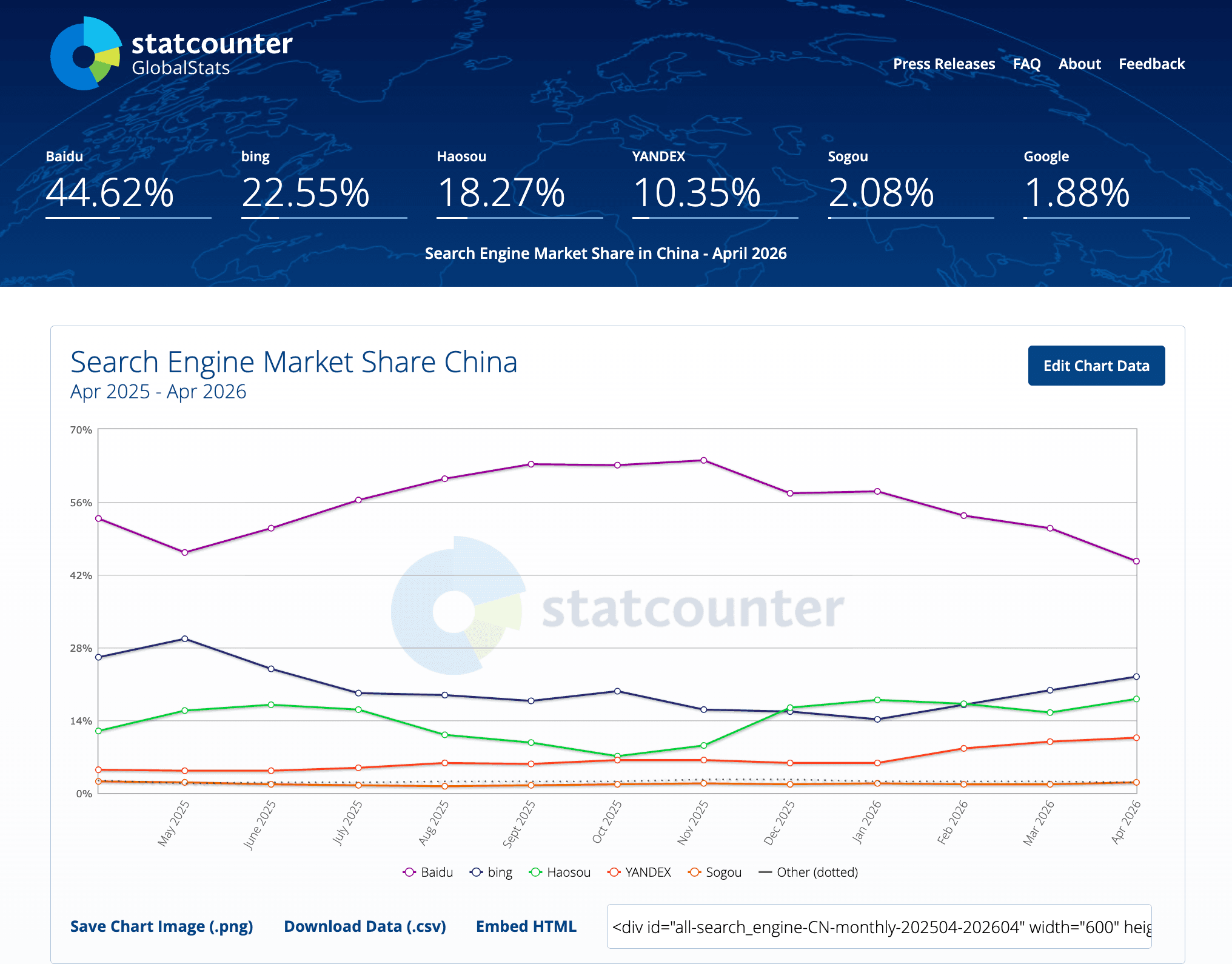
According to the latest data from Statista (April 2026), Baidu holds a 44.64% share of the Chinese search engine market, showing a gradual downward trend. It is followed by Bing and Haosou, with market shares of 22.38% and 18.17%, respectively. Despite the decline, Baidu still maintains a dominant position in China’s search engine market.
Based on our experience running campaigns across all of these platforms, here’s what we recommend:
Based on our experience running campaigns across many Chinese platforms, here’s what we recommend for Chinese search advertising:
– Start with Baidu, as it remains the largest and most impactful platform.
– Since Baidu has partnerships with Bing, Baidu ads can also appear on Bing.
– Once performance on Baidu is stable, consider expanding to Haosou.
– Due to relatively low traffic, Shenma and Sogou are rarely a priority.
Note that users perform searches on non-search platforms too, such as Rednote, Douyin, WeChat and others. Consider advertising there as well.
Baidu’s Monthly Active Users 2026
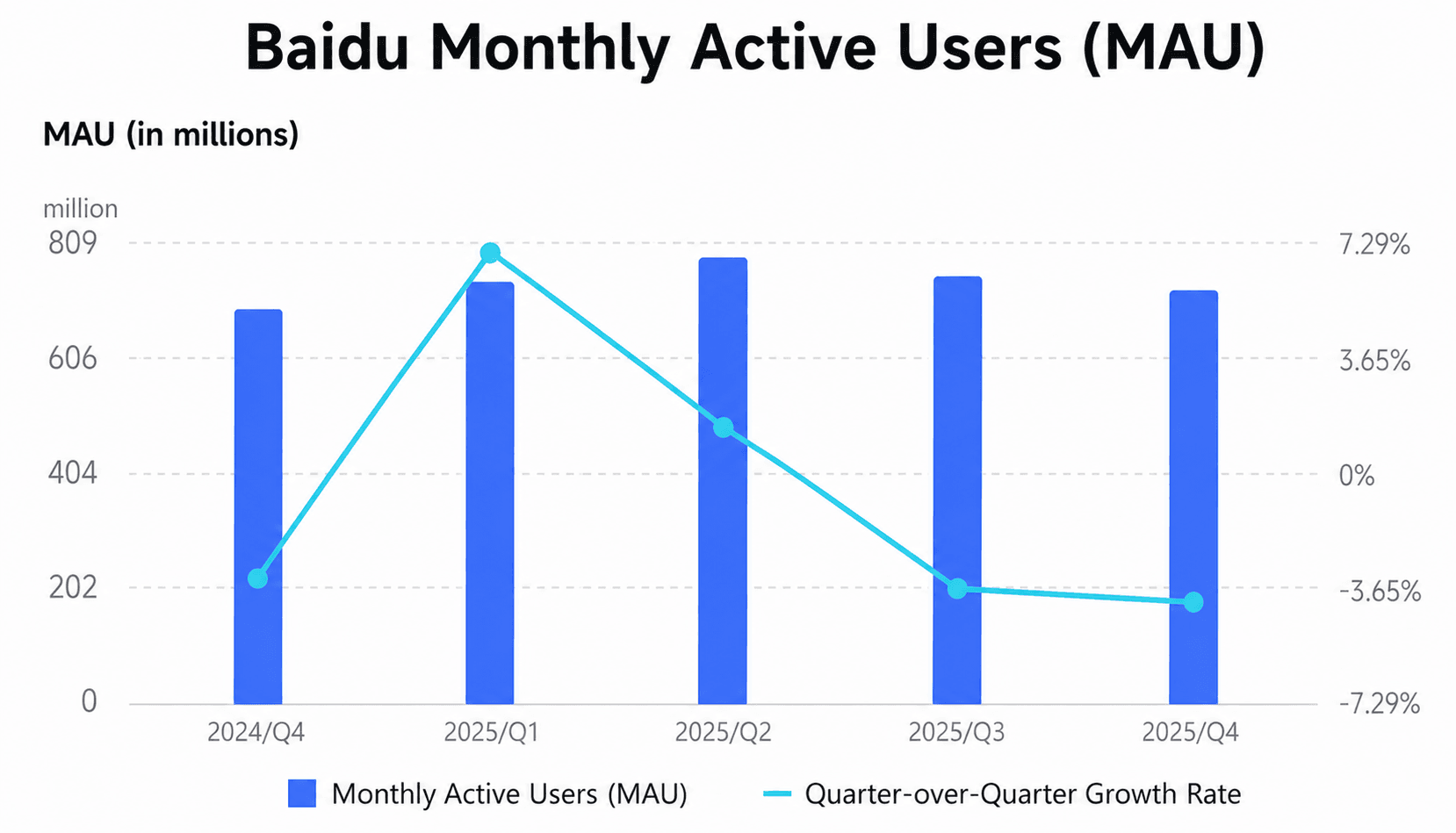
Baidu has no doubt been continuing to grow in users. According to Baidu‘s 2025 annual report, the Baidu App reached over 679 million monthly active users (MAU) in 2025 Q4, with overall user growth remaining on a steady upward trajectory.
Baidu’s Gender Demographics
AppGrowing recently released some data on Baidu’s gender demographics. As you can see from the picture below, males tend to use the search engine more than Baidu. Males make up 74% of Baidu’s users while females make up 26%.

Baidu’s Age Demographics
According to Baidu Marketing’s Commercial Value of Baidu Creators Report (2023), users aged 25–45 make up 62% of the Baidu App’s user base, with post-80s and post-90s generations forming the platform’s core audience.
Baidu’s Location Demographics
Lastly, AppGrowing highlighted how users in China’s new first-tier cities, cities like Ningbo, Chengdu, Zhengzhou, Xi’An, and Hangzhou, used Baidu’s app more than any other city. This is similar to what I saw in my article on WeChat’s demographics. For more information regarding what China’s tier system is please see that article.
As you can see from the picture below, China’s new first-tier cities make up 23.3% of Baidu’s users, while first-tier cities make up 10.4% and third-tier cities make up 20.7%. The article does not address the difference between the 24.4% at the top and the 23.3% in the graph concerning the new first-tier cities. Nevertheless, this category remains Baidu’s largest user base.
