
How to Optimize Your Multilingual Website for Baidu Success
Expanding into China’s online market opens doors to millions of potential customers, but succeeding on Baidu isn’t as simple as translating your website. Baidu, China’s leading search engine, has its own rules, user habits, and ranking factors that differ significantly from those of Google.
If you want real visibility, you need more than multilingual pages; you need a strategy built for China. Master everything from using Simplified Chinese and understanding local search intent to improving site speed, structuring URLs correctly, and leveraging Baidu’s ecosystem.
You also need to learn how to track performance with Baidu Webmaster tools and continuously adapt as your business grows.
So, how do you make your site Baidu-friendly?
This guide shows you how to optimize your website for Baidu in China step by step. With the right approach, your multilingual website can gain trust, rank higher, and truly connect with Chinese audiences.
How to Make Your Multilingual Website Work on Baidu
Prioritize Simplified Chinese & Localization
When it comes to optimizing your multilingual website for Baidu, the very first step is to focus on Simplified Chinese and true localization. This goes way beyond translating your existing content word-for-word. It’s about making sure your message feels natural and culturally relevant to Chinese users.
Why Does Simplified Chinese Matter?
Baidu mainly indexes and ranks content written in Simplified Chinese, which is the standard written language used across mainland China. If your goal is to reach users in mainland China, using traditional Chinese could significantly hurt your rankings and visibility.
To perform well on Baidu, every part of your site, such as page titles, meta descriptions, alt text, and navigation menus, should be in Simplified Chinese. This is important for good Baidu SEO on multilingual websites.
Professional Localization vs. Direct Translation
Automatic translation tools might seem convenient, but they often produce awkward, unnatural content that feels out of place to local users. This can harm your credibility and even make your brand seem unprofessional.
Instead, invest in professional translators and localization specialists. They don’t just convert words; they adapt your messaging, tone, phrases, and even expressions to fit the cultural context of Chinese readers.
Making Content Locally Relevant
Baidu’s algorithm ranks content that resonates with Chinese audiences. This means understanding local search behavior and preferences. For example, including references to local trends, popular events, or consumer habits can make your website more appealing.
Studies show that Chinese users rely heavily on platforms like WeChat and Douyin for product information, meaning localized and culturally aware content has a much better chance of ranking well and engaging users.
By prioritizing Simplified Chinese and investing in thorough localization, you’ll create a website that feels authentic to your audience and performs significantly better in Baidu search results.
Master Keyword Research & Optimization
Getting keyword research right is the foundation of any successful SEO plan, and when it comes to Baidu, the approach is different from what you might use on Google. To truly connect with Chinese users, you need tools and techniques tailored to Baidu’s search ecosystem.
Start with Baidu’s keyword tools. Platforms like Baidu Index (百度指数) and Baidu Keyword Planner give you valuable data on how people search in Simplified Chinese. Baidu Index shows search trends and keyword popularity over time.
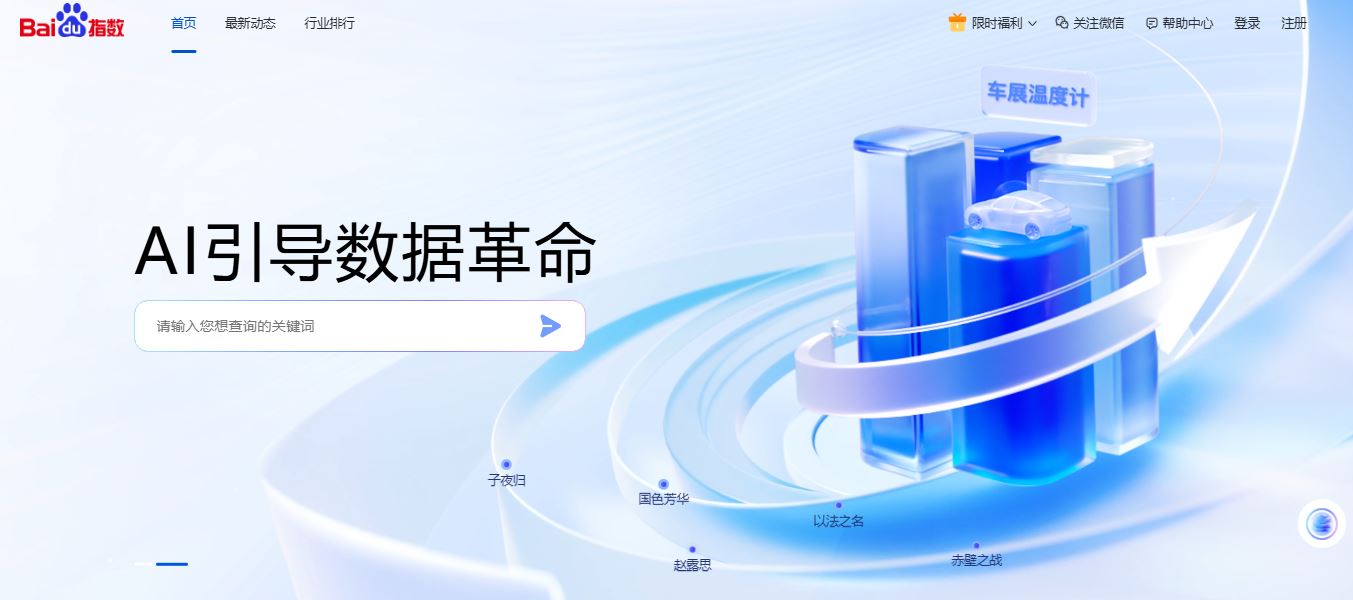
Baidu Index Page
Keyword Planner helps you understand competition levels and discover related search terms. These tools are far more accurate for the Chinese market than global keyword platforms.
Understanding Chinese search intent is equally important. Unlike Google users, who often type long, complex queries, Baidu users tend to select options from suggestions or use shorter, more precise keywords.
This behavior is partly because typing Chinese characters is more time-consuming. So, instead of optimizing for broad phrases, focus on specific keywords that directly match what people are looking for.
When it comes to keyword placement, Baidu’s algorithm still values meta keywords (something Google no longer considers).
- Include 3–5 relevant keywords in your meta tags. Place your main keyword at the start of your page titles and naturally in meta descriptions, headings, and body text.
- A keyword density of around 6–10% usually works well without triggering penalties for overuse.
Lastly, using Pinyin (Romanized Chinese) in your URLs can improve clarity and readability, but ensure that your on-page content is always in Simplified Chinese to rank effectively.
Optimize Technical Aspects & Site Structure
When it comes to Baidu ranking, getting your technical setup right is just as important as the content you create. Baidu’s search engine has its own rules and expectations, and if your multilingual website doesn’t meet them, you could struggle to get visibility, even if you have great products or services.
Speed
One of Baidu’s biggest priorities is speed. According to Baidu Zhiyuan (2022), the content that appears “above the fold” on your page should ideally load in under one second. This is especially important for mobile users, who make up the majority of China’s 1.1 billion internet population. If your website loads slowly, Baidu may push it down in search results, meaning fewer clicks and potential customers.
Mobile-First Design
Equally important is mobile-first design. Baidu reports that its mobile search engine market share in China for 2025 is 72%, highlighting the importance of optimizing your website for mobile users. Most Chinese consumers browse the web on their phones.
Your site needs to be fully responsive, meaning it automatically adjusts to different screen sizes and still looks great on any mobile device. This isn’t just about user experience; Baidu actively rewards mobile-friendly sites with better rankings.
URL structure: You also need a clear URL structure to help Baidu’s crawler understand your site. If you’re running multiple languages, consider using subdirectories (like yourdomain.com/cn/) or subdomains (like cn.yourdomain.com) for each language version.
While Baidu’s support for hreflang tags isn’t as strong as Google’s, adding them still helps indicate which content is meant for which audience.
Engage with Baidu’s Ecosystem Platforms
When optimizing your multilingual website for Baidu, you shouldn’t think of Baidu as just a search engine. It’s a full ecosystem of tools and platforms designed to help brands stand out in China.
Using these platforms effectively can not only improve your search rankings but also make your brand look more trustworthy and credible to Chinese users.
One of the most impactful tools is Baidu Baike (百度百科), which works like Wikipedia but is integrated directly into Baidu search results. Creating a well-written, factual entry for your brand or product can greatly boost your visibility.
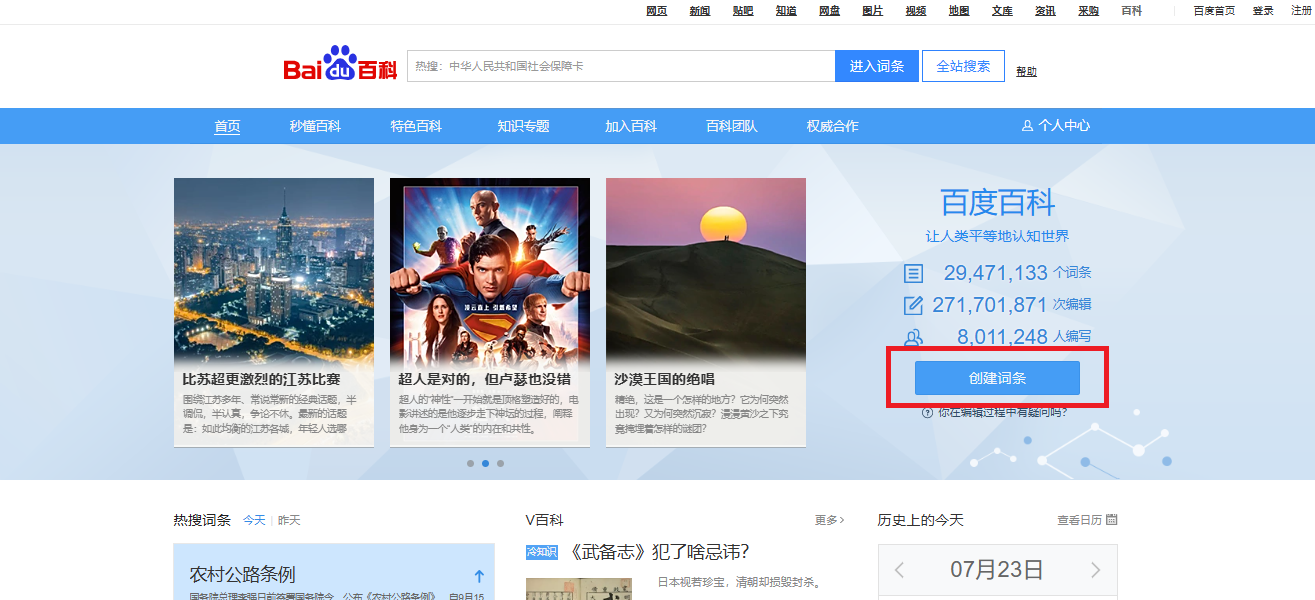
Baidu Baike page
Baike pages often show up with rich snippets and knowledge panels, making it easier for potential customers to quickly understand who you are and what you offer.
You can also build authority through Baidu Zhidao (百度知道) and Baidu Zhihu (百度知乎), popular Q&A platforms where users actively seek advice and solutions. By answering questions related to your industry, you position your brand as a helpful expert while naturally attracting traffic and engagement.
For businesses sharing news and updates, Baidu News Protocol is a powerful way to get articles indexed quickly and seen by a larger audience. This can drive targeted traffic to your website and increase brand exposure.
Example of Regular Brand Zone Placements

Lastly, Baidu Brand Zone provides premium advertising space directly in search results. This feature displays your logo, key information, and links to your pages prominently, helping you dominate branded search queries.
Monitor & Adapt with Baidu Webmaster Tools
When optimizing your multilingual website for Baidu, one of the smartest steps you can take is to regularly monitor and adapt your strategy using Baidu Webmaster Tools. Think of it as Baidu’s version of Google Search Console and Analytics; while not as advanced, it still provides valuable insights that can make or break your success in China’s search market.
With Baidu Webmaster Tools, you can check how well your site is being indexed. This is crucial because Baidu’s crawler (Baidu Spider) works differently from Google’s, and sometimes foreign websites struggle to get indexed properly.
Another key feature is the ability to spot crawl errors. If Baidu’s crawler can’t access parts of your website, your rankings will suffer. Fixing these errors quickly ensures that your content remains discoverable and search-friendly.
The platform also provides keyword ranking reports, showing you which terms are bringing in traffic. This is especially helpful for multilingual sites because you can see how your translated content performs in Simplified Chinese compared to other languages.
While Baidu Webmaster Tools may not offer every metric Google does, it’s still an essential resource. Regularly reviewing this data allows you to adapt, fix issues early, and steadily improve your visibility on Baidu’s search results.
Key Takeaways
Winning on Baidu takes more than just translating your site; it’s about truly speaking to Chinese users and understanding how Baidu works. From writing in Simplified Chinese to tweaking your site’s speed and structure, every little detail matters.
Utilizing Baidu’s tools and platforms enables you to build trust and gain visibility more quickly. Baidu’s SEO rules can be tricky; many brands team up with a trusted Baidu SEO agency to guide them through the process. With the right approach, your multilingual website can thrive in China’s search market.