
Bing vs Baidu: The Smart Search Choice for Western Businesses in China
Navigating China’s digital world means following different rules. With nearly 1.1 billion internet users, China is one of the biggest markets, but Google isn’t part of it.
Instead, Baidu is the main search engine, especially popular with mobile users. This makes Baidu advertising for foreign brands crucial for reaching Chinese customers.
At the same time, Bing is gaining popularity among expats and international professionals. So, knowing how Baidu and Bing work, who their users are, and how to use them well can open up great opportunities.
This blog explains everything Western businesses need to choose for their best search engine strategy and succeed in China’s fast-changing online market.
Understanding the Chinese Search Engine Landscape
In China, despite the growing popularity of social search, traditional search engines still play a huge role in shaping local buying decisions. With nearly 1.1 billion internet users, around 75% of them rely on search engines to find and buy products and services, making China the world’s biggest consumer market.
But search engines in China are different from those elsewhere. Baidu has become the top local search engine, always competing with Bing, the international giant, for users and market share. For businesses targeting China, understanding these search engines is key to reaching the right audience and driving sales.
Why Baidu is the Smart Choice for Western Businesses
Baidu is the “Google of China” and dominates the country’s search market. In 2024, it controls about 54.36% market share. That means if you want to reach a large number of Chinese customers, Baidu is where they’re searching.
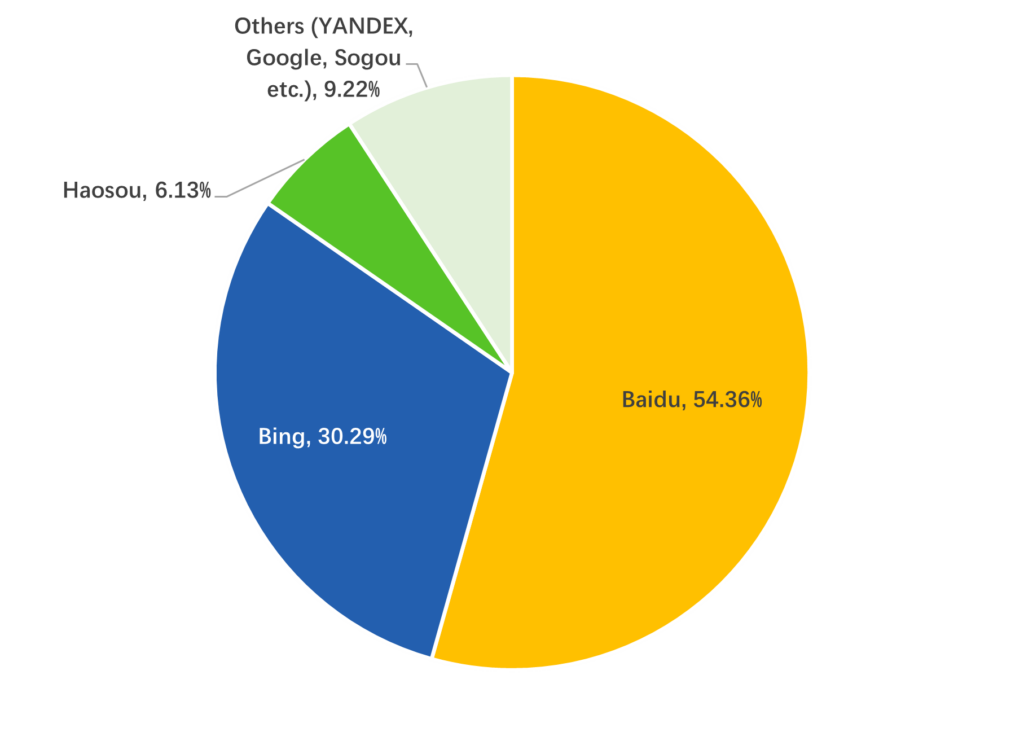
Baidu market share (2024)
Source: StatCounter
But it’s more than just a search engine; it has its ecosystem with tools like Baidu Maps, Baidu Baike (like Wikipedia), and Baidu Zhidao (Q&A forums). Its algorithms are designed for the Chinese language and browsing habits, making it easier for businesses to connect with local users.
Even though Baidu leads the market overall, the usage difference between desktop and mobile tells a different story.
In 2024, Baidu held just 30.01% of the desktop search engine market in China. However, it dominates the mobile search market with a much larger share of 67.99%. This shows a clear difference in Baidu’s performance across desktop and mobile platforms.
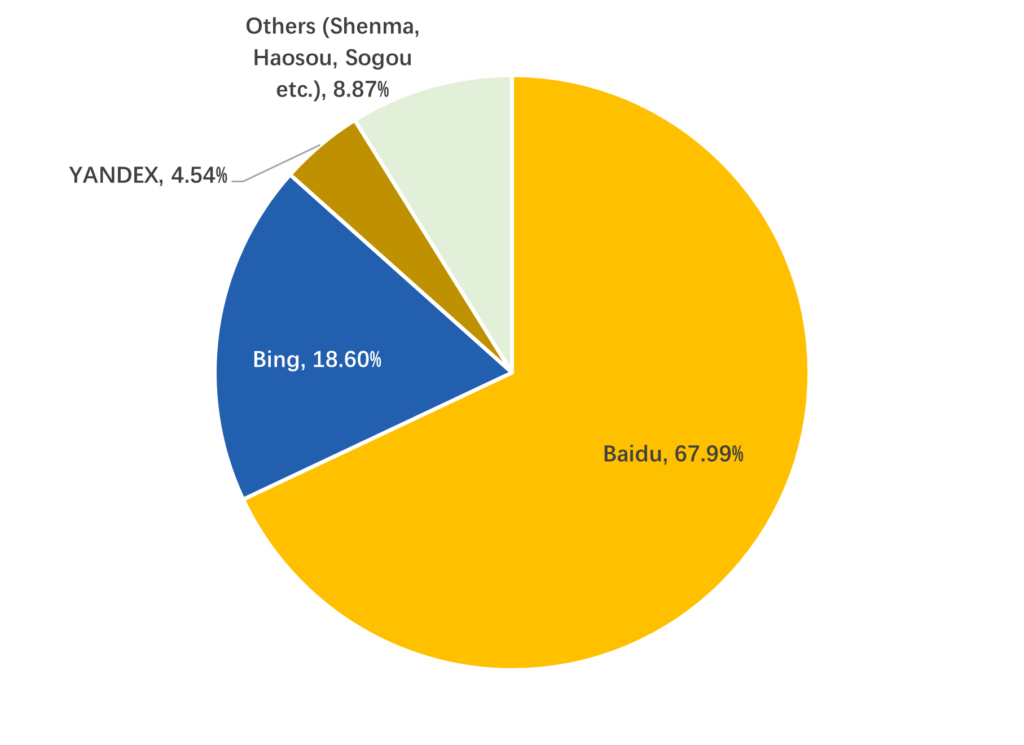
Mobile Market Share Of Baidu In China (2024)
Source: StatCounter
Baidu gives users information in many ways through websites, news articles, images, videos, and blogs. It also has its tools, like Baidu Baijiahao (a platform for online publishing) and Baidu Images for visual searches, along with several other services that make searching more useful.
Baidu aims to understand what users want and provide results that feel natural and familiar to them. This focus on local needs is what sets up its Localized Search Features.
Localized Search Features
Baidu customizes its search results to suit Chinese culture and preferences, making it more relevant and user-friendly for local users. Unlike global search engines, Baidu considers local factors like language, regional slang, and popular trends to deliver results that align with what Chinese consumers are looking for. This gives businesses a better chance to connect with the right audience.
SEO Optimization on Baidu
To rank well on Baidu, focus on using Chinese-language keywords that match local search habits. Ensure your website is optimized for mobile since many Chinese users access the internet on their phones. Additionally, build local backlinks from Chinese websites to boost your site’s authority. Local content, like news or updates specific to China, will also help your site perform better on Baidu’s algorithm.
Baidu Advertising
Baidu offers a variety of advertising options, such as Baidu PPC (pay-per-click) and Baidu Tuiguang. These tools are more effective for reaching Chinese consumers since Baidu is the dominant search engine in China. With Baidu’s advertising, Western businesses can target local consumers more precisely, increasing the chances of conversion.
Mobile Search Dominance
Mobile searches are rapidly growing in China, with more people using smartphones than desktops to browse the internet. Baidu has adapted to this trend by making its platform mobile-friendly. For businesses targeting mobile-first Chinese consumers, Baidu’s mobile optimization offers a significant advantage in reaching this large and growing audience.
While Baidu dominates the search market in China, Bing is slowly gaining traction. Let’s look at why Baidu remains the top choice and how Bing is becoming a promising alternative.
Bing: A Promising Alternative
In 2024, Bing made a significant impact in China’s search engine market. Across all devices, it holds about 30% of the market, which is a substantial share for an international search engine. On desktop, Bing is performing even better, taking the lead with a 50.41% market share, which is larger than Baidu’s.
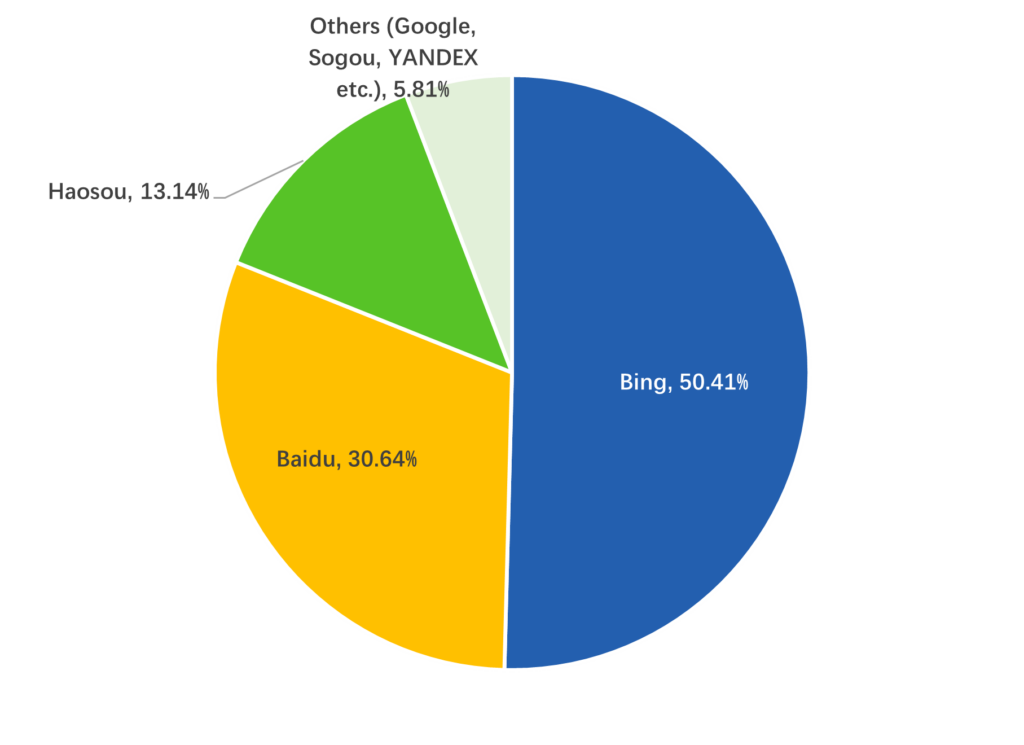
Desktop Market share of Bing in China ( 2024)
This boost came after Microsoft introduced AI-powered search features in March 2024. These updates brought smarter Knowledge Cards, AI-generated Stories, and richer, more engaging search results, attracting more desktop users.
On mobile devices, Bing’s share is smaller at 18.6%, but it’s steadily growing as users explore its improved AI search capabilities.
This growing adoption highlights how Bing is carving out a strong presence among a specific audience segment in China.
Let’s explore it.
Targeting Specific Audiences
Bing is popular with a specific group of internet users in China. Many of its users are educated professionals, international businesses, and tech-savvy people who prefer a search engine with more global reach.
This makes Bing advertising in China a great option for Western companies that want to target niche markets, especially customers with higher purchasing power or strong international connections. Bing is commonly used by expats, tourists, and foreign business professionals living or traveling in China.
Since they are more familiar with Bing and its English-friendly search results, businesses aiming to reach this audience can benefit from advertising and optimization for Bing, making it easier to connect with the customer base.
Less Competition
One big advantage of using Bing in China is the lower competition compared to Baidu. Since most businesses focus heavily on Baidu for SEO and advertising, Bing remains less crowded, making it easier and faster to rank on search results. This can lead to a better return on investment (ROI) for targeted campaigns.
For Western businesses, this is a great opportunity, especially when targeting desktop users, where Bing holds over 50% market share in China. By optimizing for Bing, companies can stand out more easily, reach high-value audiences, and capture traffic that many competitors are overlooking.
But in China, foreign search engines face strict regulatory changes. Government censorship tightly controls what can appear in search results, limiting visibility for many international businesses. On top of that, strict market regulations and Baidu’s dominance create significant competition.
Key Differences Between Baidu and Bing
| Feature | Baidu | Bing |
| Algorithms | Local-focused, favors Chinese-hosted sites. | Global approach, easier for foreign sites. |
| Ads | Fully Chinese, it often shows Baidu-owned results. | Simple setup, easier for Western firms. |
| Interface | Fully Chinese, it often shows Baidu-owned results. | Clean, Google-like layout. |
| Language | Primarily Chinese only. | Strong English support. |
| Censorship | Fully Chinese, it often shows Baidu-owned results often. | Less strict but still compliant. |
Actionable Steps for Western Businesses to Make Smart Search Choices
Understand Your Target Audience
Before choosing between Baidu and Bing, first know your audience. If you’re targeting Chinese locals, Baidu is the better choice since it’s the most used and fully tailored to the local language and culture.
But if your focus is on expats, tourists, or international professionals in China, Bing is often more effective because it’s English-friendly and widely used by non-Chinese speakers. Understanding who you want to reach will help you pick the right search engine and create campaigns that truly connect.
Baidu First Optimization
If you’re entering China’s market, start with Baidu since it dominates search. To rank well, make sure your website is hosted in China (with an ICP license), use simplified Chinese keywords, and focus on mobile optimization.
Build backlinks from local sites and create content tailored to Chinese consumer behavior. For advertising, set up a Baidu PPC account, use targeted ads, and monitor performance with Baidu Analytics to reach customers effectively and boost visibility quickly.
Localization
No matter which platform you choose, Baidu or Bing, localization is key to success in China. Simply translating your website isn’t enough. You need to adapt your content, keywords, and messaging to fit Chinese culture and language.
This means using the right tone, understanding local search habits, and even adjusting visuals to match local preferences. Investing in professional localization not only helps you connect better with Chinese consumers but also improves your chances of ranking higher and building trust online.
Use a Chinese Social Media Platform
To succeed in China, don’t rely on search engines alone. Combine your Bing or Baidu marketing with popular Chinese social media platforms like WeChat and Weibo. These platforms are where customers spend most of their time, making them perfect for boosting visibility and engagement. Share content, run ads, and connect with users directly while driving traffic to your website through search.
Key Takeaways
Success in China’s search market means being smart about using both Baidu and Bing. Baidu’s strong local focus and wide range of tools make it essential for your Baidu advertising efforts. Meanwhile, Bing offers less competition and helps you connect with international audiences.
The key is optimizing for Baidu vs Bing by tailoring your approach to each platform’s strengths. By combining good localization with the right choices, you can reach the right customers in China and get the best results. It’s not just about showing up, it’s about being smart and flexible in this fast-changing market.