
Baidu Vs Google: What B2C Marketers Need To Know Before Launching a 1Brand In China
Launching a brand in China isn’t just about localization, it’s about re-engineering your digital strategy from the ground up. Many B2C marketers make the mistake of thinking Baidu is simply “China’s Google,” but that comparison quickly falls apart in practice.
Baidu’s algorithms prioritize different signals, its advertising platform has stricter compliance rules, and its users engage with content in ways that are unique to the Chinese digital space. If you’re entering China with a strategy built for Google Ads and Western-style SEO, you’re setting yourself up to miss the mark.
Whether you’re launching a new consumer brand or expanding an existing one, you’ll learn how to adapt your approach for real results in China’s B2C market.
This guide is here to help you get it right. We’ll walk you through the real differences between Baidu and Google from search behavior and content formatting to ad setup, mobile UX, and analytics.
Baidu vs Google: Key Search Behavior Differences
| Aspect | Baidu | |
| Search Intent | Often transactional or direct | Often exploratory, research-driven |
| Content Preference | Concise, visual, CTA-focused | Informational, long-form, educational |
| Trust Signals | Reviews, social proof, HTTPS | Business verification, Baike pages, presence on Baidu products |
| Click Behavior | Users scan SERPs for relevance | Brand legitimacy, thorough explanation, and trust elements |
| Language Usage | English, with global terminology | Simplified Chinese with local nuance |
| Conversion Triggers | Users are more likely to explore ads and native content together | Brand legitimacy, thorough explanation, trust elements |
Baidu users tend to convert only after seeing “official” brand signals such as a verified Baidu account, native-language landing pages, or local hosting, making content quality and authenticity critical for success. Baidu users expect more educational content before converting.
SEO Analysis: Google vs Baidu Algorithms
If you’re used to optimizing for Google, shifting your SEO mindset for Baidu is more than just translating content; it’s a full-on strategy pivot. While the fundamentals of good SEO apply everywhere, Baidu’s algorithm plays by different rules and rewards different behaviors.
Let’s take a deeper look.
Technical SEO
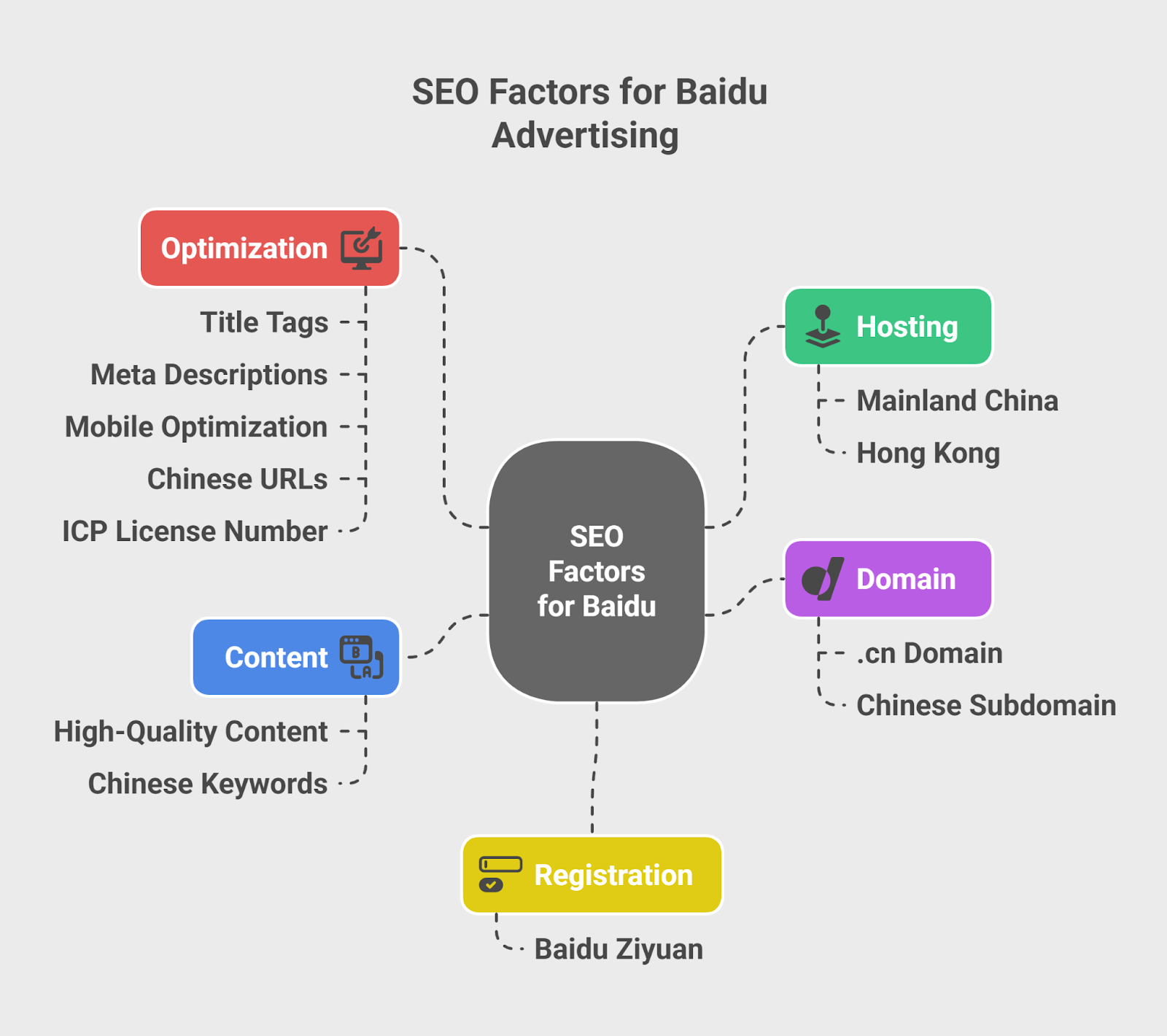
Google emphasizes mobile-first indexing and high-quality backlinks from reputable domains. Baidu, on the other hand, prioritizes local speed and accessibility. That means if your site isn’t hosted in or near mainland China, you’re already starting with a disadvantage. Baidu’s crawlers are also faster when your site is submitted through Baidu Ziyuan, their equivalent of Google Search Console.
Content Expectations
With Google, you win by being clear, concise, and structured. Keywords matter but so do schema, headings, and snippet optimization. For Baidu, it’s more about depth and localization. Long-form content with rich media, native Simplified Chinese, and a good balance of keyword density still carries weight. Metadata like meta titles and descriptions plays a bigger role in Baidu rankings than it does on Google today.
Local Hosting & Compliance
If you want your site to rank well on Baidu, compliance is non-negotiable. This includes securing an ICP license (required to legally host in China), using .cn domains, and ensuring content aligns with local regulations. Even the format of your URLs can affect indexation.
Bottom line?
Baidu’s SEO isn’t hard, but it is very different. Success means understanding its ecosystem, aligning with its priorities, and optimizing from a truly local perspective. Think of it as SEO with a Chinese twist, more technical setup, more content depth, and a whole lot more local nuance.
Advertising on Baidu vs Google
If you’ve run Google Ads before, you might expect to launch Baidu campaigns with a few clicks and a credit card. But here’s the truth, Advertising on Baidu is a different ballgame, one that requires more setup, more compliance, and a deeper understanding of local behavior. Once you’re in, it can be incredibly powerful for building brand trust and generating leads in China.
Account Setup
With Google Ads, you can launch globally in minutes. Just create an account, load your billing info, and you’re ready to go. Baidu Ads is a much more controlled environment. You’ll need either a verified Chinese business entity or a trusted local agency (like NMG) to act as your partner.
The platform is in Chinese, and documentation, including business licenses and sometimes product approvals, is also required. While the process takes more time, it helps build legitimacy in the eyes of Chinese consumers.
Ad Formats & Placements
While Google offers a wide array of formats (search, display, shopping, video), Baidu focuses on search ads, Baidu Union (its display network), mobile in-app ads, and native lead gen forms.
These placements are highly integrated with other Baidu products like Baike (Wikipedia-style knowledge base) and Zhidao (Q&A forum), meaning your ads can show up in places where people are actively researching and comparing.
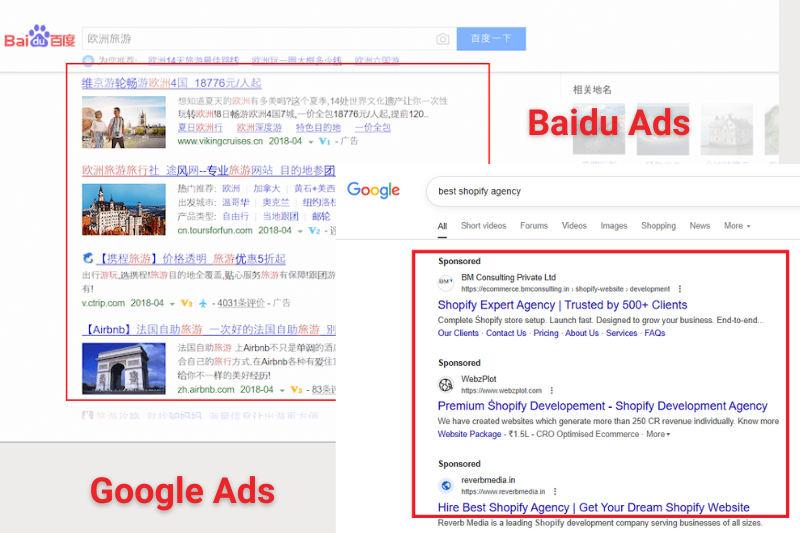
Baidu’s mobile ecosystem is designed for immediate engagement, with built-in lead forms and app-like experiences that keep users inside the Baidu environment. This setup is especially effective for B2C marketing in China, as it aligns perfectly with the way Chinese users browse and interact.
Budget and Bidding
Both platforms use CPC (cost-per-click) models, but Baidu requires more manual oversight. Ads are subject to strict content reviews, especially in sensitive industries like health, beauty, and finance. Your creative needs to be not only compelling but also compliant with local advertising laws.
So, while Google may be faster to start, Baidu’s structured setup can give you longer-term strategic control with higher trust, better-qualified leads, and less ad clutter. If you’re willing to invest in proper setup and cultural adaptation, Baidu Ads can become a cornerstone of your China growth strategy.
Mobile Experience: Baidu’s UX Expectations
Here’s the reality: if your mobile site is slow, clunky, or doesn’t feel “local,” Chinese users won’t stick around. In China, where 99.9% of internet users access the web via mobile, mobile-first isn’t just a best practice, it’s a baseline expectation.
Baidu takes mobile UX seriously. It even offers MIP (Mobile Instant Pages), a framework that preloads content to ensure near-instant page speeds. If your site takes more than 3 seconds to load, you’ve likely already lost the user.
But it’s not just about speed. Chinese consumers are looking for native-looking mobile sites that feel familiar, load fast, and include integrated contact tools like chat buttons or QR codes for WeChat follow-up.
Whether you’re showcasing a product, sharing a case study, or capturing leads, your mobile experience must be polished, responsive, and tailored for the Chinese user. Because on Baidu, trust begins with how your site performs in the palm of their hand.
Baidu B2C Strategy For Western Marketers
If you’re a B2C marketer entering China, success on Baidu doesn’t come from copying your Google playbook. Baidu demands a localized, user-first approach from the content you create, to the ads you run, to how your mobile experience feels.
Let’s break down how to tailor your strategy across three key areas:
Content That Educates and Builds Trust
Baidu users aren’t just looking to buy, they’re looking to learn. Chinese consumers rely heavily on informational, long-form content before making a decision. This means publishing native-language articles, detailed product descriptions, FAQs, and brand background pages that feel “official.
Forget one-pagers and flashy headlines. On Baidu, credibility is earned through substance. Optimizing this content with proper metadata and keyword density (yes, that still matters in China) helps ensure it ranks well.
Bonus tip: Publishing content via Baidu-owned platforms like Baike (knowledge base) and Zhidao (Q&A) boosts visibility and trust.
Ads That Don’t Just Sell—They Nurture
Baidu ads aren’t just for driving clicks, they’re for guiding users through a trust-building journey. Focus on Chinese-language keyword targeting and pair ads with localized landing pages that echo the messaging.
Whether you’re promoting a product or a limited-time offer, lead gen forms, mini-programs, or native ad formats tend to perform best.
Baidu PPC advertising requires compliance checks, especially for regulated industries like health, education, or cosmetics. Make sure your ad copy is accurate, modest, and fully aligned with Chinese ad laws to avoid rejection.
UX That Feels Fast, Familiar, and Mobile-First
A sleek desktop site doesn’t impress Chinese users who live on mobile, and your site needs to reflect that. Baidu favors mobile-optimized websites with fast load speeds (under 3 seconds), intuitive navigation, and a native feel.
Use Baidu’s MIP (Mobile Instant Pages) to preload key content, and integrate contact tools like live chat buttons or WeChat QR codes. These features are not just helpful, they are expected.
By adapting your content, advertising, and user experience for Baidu’s unique ecosystem, you’ll not only gain visibility but you’ll also build the trust needed to convert Chinese users into loyal customers. Think local, act mobile, and let Baidu do the heavy lifting.
Baidu Marketing Strategy: A Practical Roadmap For B2C Brands
If your digital strategy is built around Google, it can be tempting to try to replicate that model in China. But success on Baidu requires more than just translation; it demands a localized, mobile-first, and regulation-aware approach.
Here’s a step-by-step roadmap to get you started.
Step 1: Get Verified for Baidu Ads & Analytics
Before anything else, you’ll need to verify your business with Baidu. This means providing a valid business license, Chinese website content, and a trusted contact person in China. While it’s more paperwork than Google Ads, this process helps establish trust and transparency, both vital for reaching Chinese users.
Step 2: Transcreate Your Website and Host in China
Don’t just translate. That means adapting not only the language but also the content, structure, and tone for a Chinese audience. Hosting your site inside China or Hong Kong is key to faster load speeds and better Baidu indexation. Here, local hosting boosts your chances of securing an ICP license, which is essential for full online visibility.
Step 3: Use Chinese-Language Keyword Research
Forget what you know about English keywords. Chinese users search differently, and longer, more conversational queries are common. Use local tools (like Baidu Keyword Planner or Zhanzhang) to uncover the exact terms your audience uses, and align your content accordingly.
Step 4: Build Localized, Mobile-First Landing Pages
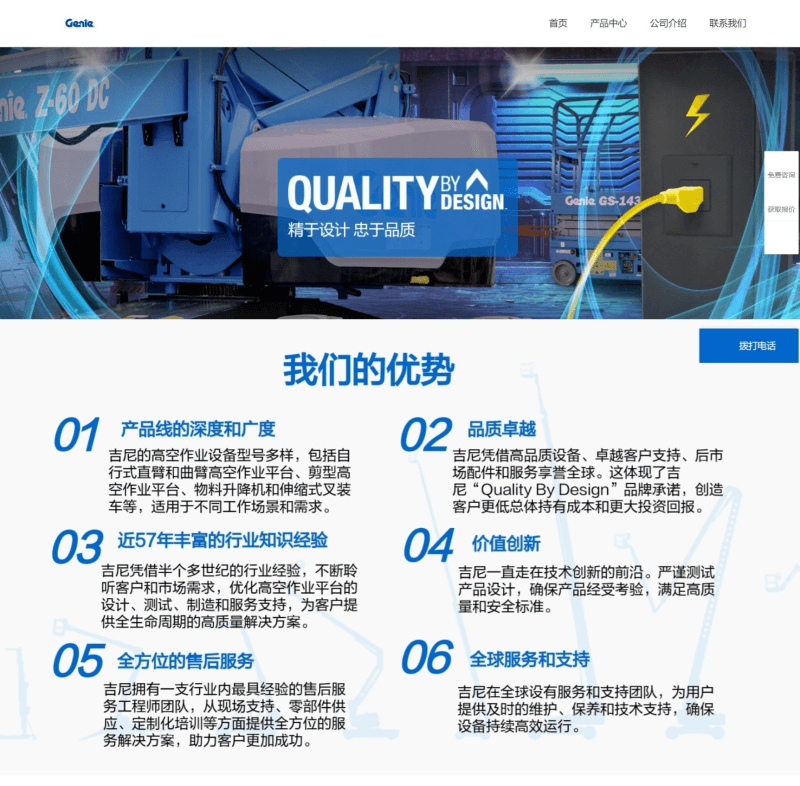
Your landing pages must be designed specifically for Chinese mobile users. That means quick-loading content, native UI patterns, embedded chat buttons (think WeChat QR codes), and simple calls to action. Skip this, and you’ll lose users before they even read your offer.
Step 5: Set Up Baidu Ziyuan & Tongji for Optimization
These tools are Baidu’s version of Search Console and Google Analytics. Ziyuan helps you monitor crawl issues, click data, and keyword rankings. Tongji tracks traffic behavior and conversions. Combined, they give you a full view of what’s working and what’s not.
Step 6: Launch a Phased Ad Strategy
Start with brand awareness, then move into retargeting and conversion campaigns. Baidu ads tend to perform better when paired with localized content and strong follow-up processes. Be patient, Chinese buyers take longer to convert, but when they do, they’re often highly loyal.
Step 7: Monitor Compliance Closely
Baidu is strict. Claims about products, especially in industries like health or finance, must meet local standards. Always review ad copy and keywords for potential red flags.
With the right steps, your Google-based digital experience can evolve into a Baidu-optimized powerhouse one that builds trust, captures leads, and drives long-term results in the Chinese market.
Final thoughts
Launching a brand in China isn’t about tweaking your Western strategy, it’s about building a new, localized digital foundation from the ground up. Baidu is not just a ‘Chinese Google’; it’s an entirely different ecosystem with its own rules, tools, and audience expectations.
To succeed, B2C marketers must navigate the unique marketing challenges China presents, from platform behavior to consumer trust and regulatory compliance.
Ready to take the leap? Start by partnering with our team for Baidu advertising and understanding both your Western goals and China’s unique marketing landscape.
Contact us today!