
How Foreign Businesses Can Design High-Converting Baidu Pages
Want to tap into China’s massive online market? Baidu landing page optimization is key to turning visitors into customers.
But Baidu isn’t just Google in Chinese. It has its own rules, user habits, and cultural preferences that foreign businesses need to understand to succeed. From mobile-first design and lightning-fast load times to using Simplified Chinese and local trust signals, every detail matters.
This article explains everything you need to know to create a landing page that not only ranks well on Baidu but also converts Chinese users effectively.
Ready to unlock China’s potential? Let’s dive in!
Understanding Baidu’s User Behavior
When it comes to optimizing a landing page for conversions on Baidu, the first thing foreign businesses need to understand is that Baidu users behave very differently from Google users. Baidu’s audience is primarily Chinese-speaking, highly mobile-driven, and deeply influenced by local cultural nuances.
In fact, over 99% of Chinese internet users access the web via mobile devices, meaning your localized landing page for Baidu must be fast-loading, mobile-friendly, and easy to navigate on smaller screens.
Baidu’s algorithm is also built with user experience at its core.
It ranks landing pages that load quickly (especially those hosted locally in China), have a clear structure, and avoid broken links or blocked resources like Google APIs. If your page is slow or feels foreign to users, Baidu will push it down in search results, making conversions much harder.
But technical optimization alone isn’t enough; you need cultural alignment. Chinese consumers place high value on trust signals such as verified Baidu “V” badges, recognizable payment options (like Alipay and WeChat Pay), and locally familiar communication channels (QR codes linking to WeChat).
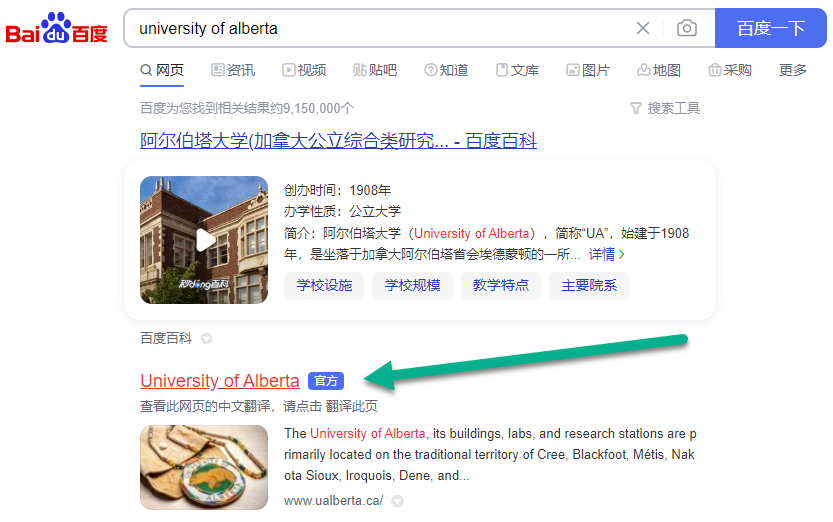
Example of Verification badge
Content should be written in Simplified Chinese with messaging that feels natural, not directly translated. Even visuals matter, like colors, icons, and imagery that resonate with Chinese culture, can significantly increase engagement.
In short, Baidu isn’t just a search engine; it’s a unique digital ecosystem shaped by local habits. To convert users effectively, your landing page must feel fast, trustworthy, and culturally relevant, aligning with the way Chinese audiences search, browse, and make purchasing decisions.
High-Converting Landing Page Design for Baidu Users
When designing a landing page for Chinese consumers, understanding their preferences is key to driving conversions. Unlike Western users, Chinese audiences expect speed, clarity, and cultural familiarity, so your page needs to be built with these factors in mind.
User-Friendly Design
Chinese users prefer landing pages that are simple, clean, and easy to navigate. A cluttered design with too many links or pop-ups can overwhelm visitors and cause them to leave. Instead, focus on a minimal layout with clear sections and a strong, visible call-to-action (CTA).
For example, a bold “Buy Now” button placed above the fold helps users take action quickly without scrolling.
Language
Directly translating English content into Chinese rarely works. To connect with users, your message should be written in Simplified Chinese with localized phrasing that feels natural.
This includes using familiar idioms, addressing local preferences, and adapting the tone to Chinese communication styles. A truly localized message builds trust and feels more personal.
Visual Elements
Images and videos play a big role in Chinese landing page performance. People relate more to visuals featuring local models, familiar settings, and culturally meaningful designs.
Traditional Chinese motifs, popular colors, and videos showing product usage in everyday Chinese life can significantly boost engagement.
Trust Signals
Trust is crucial for conversions. Displaying Chinese certifications, official seals, customer reviews, and recognizable payment options like Alipay or WeChat Pay reassures users that your brand is reliable. Adding social proof, such as testimonials or mentions from local influencers, can further increase credibility.
CTA Placement
CTAs should be impossible to miss. Place them where users naturally pause while reading, ideally multiple times throughout the page. Use contrasting colors and concise wording, and make sure buttons are large enough for mobile users to tap easily.
By combining clean design, proper localization, appealing visuals, strong trust signals, and strategic CTA placement, your landing page will feel more familiar and trustworthy.
Optimizing for Baidu’s Algorithm
If you want your landing page to perform well on Baidu, it’s not just about great design; it also needs to meet Baidu’s algorithm and technical requirements. Here’s how you can get it right.
Mobile Optimization
Baidu has shifted to mobile-first indexing, meaning it looks at your mobile version first when deciding rankings. If your landing page isn’t fully mobile-optimized, you risk poor visibility and lost conversions. That means responsive layouts, easily clickable buttons, and fast-loading mobile pages.
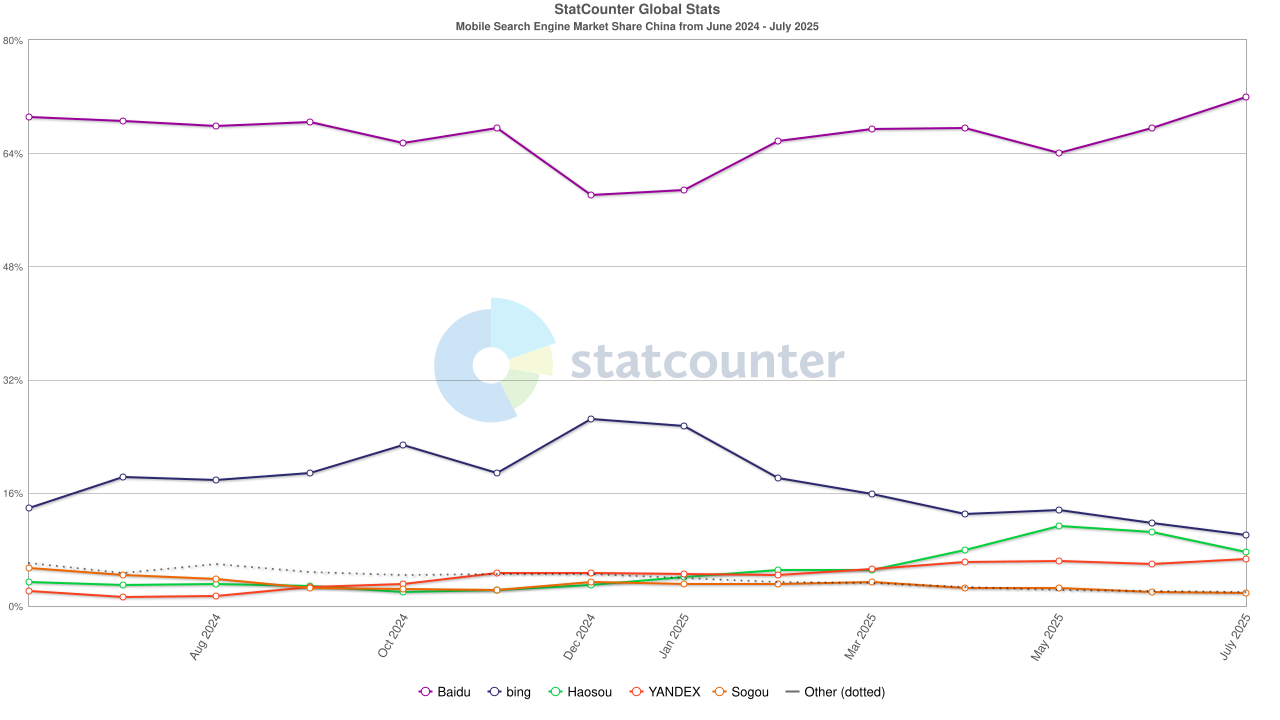
Mobile search engine market share in China ( 2025)
Source: (StatCounter)
Page Speed and Load Time
Baidu favors fast websites. A landing page that loads in under two seconds improves both SEO and conversion rates. Slow-loading pages frustrate users and cause high bounce rates.
- Compress images without losing quality
- Use lightweight code and avoid heavy scripts
- Enable browser caching to reduce reload times
Local Hosting
Hosting plays a big role in Baidu’s performance. Sites hosted outside China often face slow loading times because of the Great Firewall. Hosting your landing page within China or using a CDN with servers in mainland China can significantly boost speed and search rankings.
Many successful foreign brands rely on local hosting to provide a smoother, more trustworthy experience for Chinese users.
By ensuring your landing page is mobile-friendly, lightning-fast, and locally hosted, you’ll meet Baidu’s technical standards, giving you a much better chance of ranking higher and converting visitors into customers.
Keyword Optimization for Baidu Search
Optimizing keywords for Baidu is not the same as doing SEO for Google. To create a landing page that converts in China, you need to understand how Baidu’s search behavior works and how to choose keywords that resonate with local users.
Understanding Baidu’s Search Behavior
Baidu users typically search using shorter, more direct phrases because typing Chinese characters takes more time than typing English words. Unlike Google, where long-tail keywords are common, Baidu searches often involve 2–4 character phrases.
For example, instead of searching “best running shoes for men,” a Chinese user might simply type “男士跑鞋” (men’s running shoes).
Localized Keywords
Simply translating English keywords into Chinese won’t work well. You need to research localized search terms that reflect how people in China actually search. Tools like Baidu Index (百度指数) and Baidu Keyword Planner can help you find trending keywords.
For instance, while “smartphone” translates to “智能手机,” locals might more commonly search for specific brand names or slang terms like “华为手机” (Huawei phone).
Once you’ve found the right keywords, place them strategically:
- Title tags: Start with your main keyword (e.g., “男士跑鞋 – 品牌名称”).
- Meta descriptions: Naturally include keywords while making it clickable.
- Headers (H1, H2): Use variations of your keyword for structure.
- Body text: Sprinkle keywords naturally without overstuffing (6–10% density).
Example: A fitness brand could write a headline like “高品质男士跑鞋,舒适与性能兼具” (High-quality men’s running shoes, combining comfort and performance), which uses keywords naturally and reads well to local users.
This keyword approach helps Baidu understand your page, boosts visibility, and increases your chances of converting visitors.
Content Strategy to Drive Conversions on Baidu
Driving conversions on Baidu isn’t just about ranking high; it’s about having a content strategy that truly connects with Chinese users. Your landing page copy needs to feel natural, persuasive, and tailored to local culture.
Compelling, Localized Copy
Chinese consumers value clarity and emotional connection. Instead of directly translating your Western copy, adapt it to local culture, tone, and expressions.
For example, a skincare brand might use phrases like “温和呵护,适合亚洲肤质” (gentle care, suitable for Asian skin) rather than a generic “for sensitive skin.” Using culturally familiar terms builds trust and makes your message resonate.
Clear Value Proposition
Visitors should instantly know why they should choose you. Highlight benefits clearly and place them above the fold. For instance, instead of just saying “Free Shipping,” say “全国包邮,48小时快速送达” (Nationwide free shipping, fast 48-hour delivery), which feels specific and appealing to local users.
Long-Form vs. Short-Form Content
Unlike many Western landing pages that favor minimal text, Chinese users are often more comfortable with long-form pages. They like to see detailed product information, FAQs, and testimonials before making a decision.
For example, a tech product landing page may include specs, comparisons, reviews, and demo videos all on one page. However, for simple offers (like signing up for a free trial), a short-form page with a strong CTA works better.
Keeping your copy the right length and making it localized helps your landing page rank on Baidu and turn visitors into customers. These are key Baidu PPC landing page tips for better results.
Final Thoughts
Optimizing your landing page for Baidu SEO for foreign businesses means understanding China’s unique online landscape and user expectations. By focusing on mobile-first design, cultural relevance, local keywords, and fast loading times, you create a seamless experience that builds trust and drives conversions.
Remember, success on Baidu isn’t just about visibility, it’s about connecting with Chinese users in a way that feels natural and reliable. With the right Baidu advertising strategy, your business can confidently enter and thrive in China’s vast digital market.